
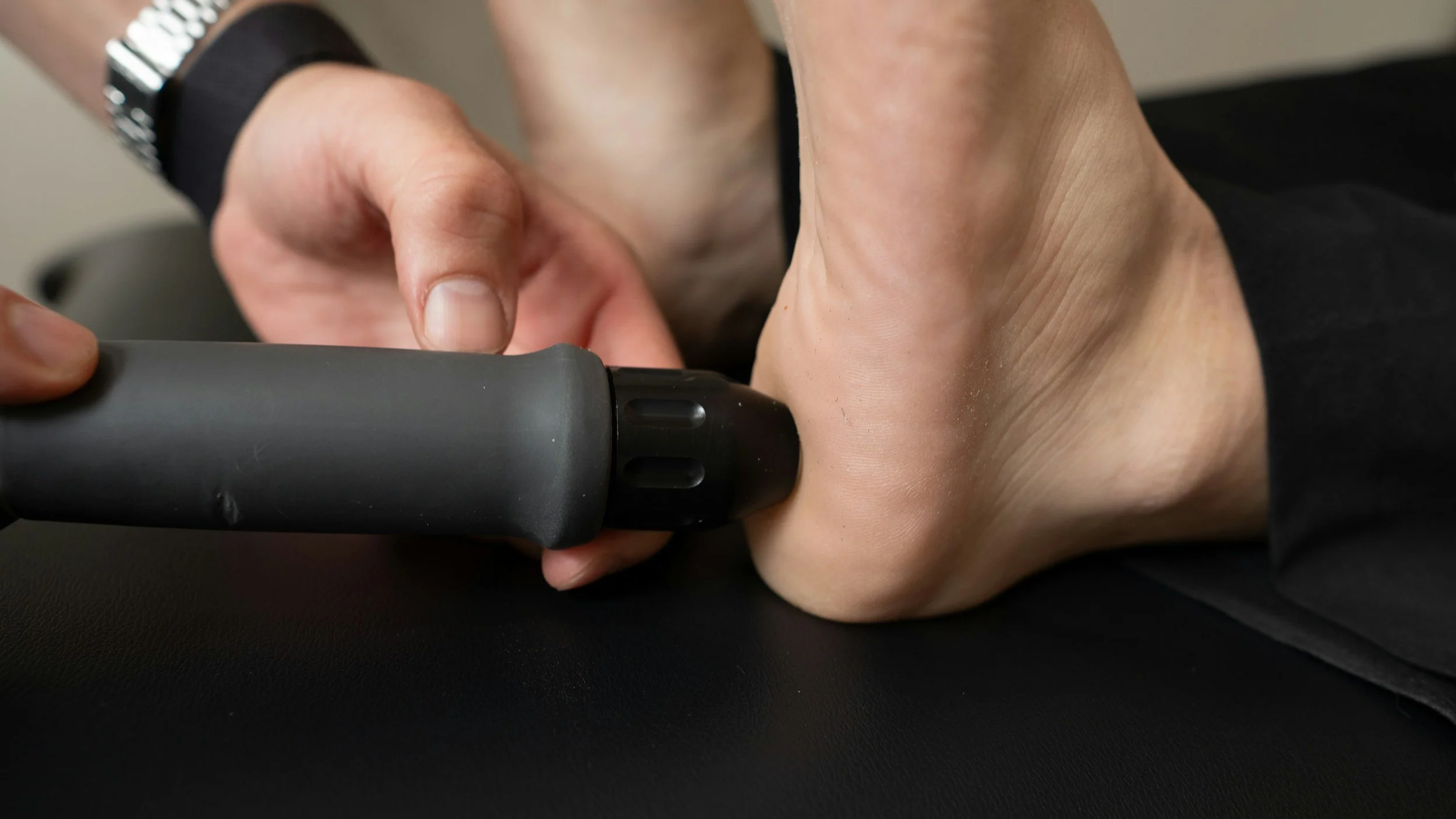
What Is Plantar Fasciitis?
The plantar fascia is a strong band of connective tissue running along the bottom of the foot from the heel toward the toes. It helps support the arch and plays an important role in managing force as you walk and run.
The term plantar fasciitis is widely recognized, although clinicians increasingly use plantar fasciopathy because persistent cases do not appear to involve inflammation alone. Repetitive loading and changes within the plantar fascia itself can contribute to chronic symptoms.
Mayo Clinic describes plantar fasciopathy as a common condition involving the fibrous tissue along the bottom of the foot, with pain most commonly occurring near the inside of the heel during weight bearing.
Classic symptoms include:
Sharp or aching pain near the bottom of the heel
Pain during the first steps in the morning
Pain after getting up from prolonged sitting
Discomfort after long periods of standing or walking
Pain after running or exercise
Tightness through the arch of the foot
Calf tightness
Symptoms that improve temporarily after warming up but return later
That first step pattern is one of the most recognizable characteristics of plantar fasciopathy.
Why Does the First Step in the Morning Hurt So Much?
People with plantar fasciitis frequently describe the same experience.
They wake up feeling relatively comfortable.
They place the foot on the floor.
Then the heel feels like someone drove a nail into it.
While you sleep, the foot remains relatively unloaded and the plantar fascia is not repeatedly lengthened through walking. When weight is suddenly placed through an irritated plantar fascia again, those first few steps can be particularly uncomfortable.
The same pattern may occur after:
Sitting through a meeting
Driving for an extended period
Watching television
Sitting through dinner
Resting after exercise
Many patients notice that the foot temporarily loosens as they walk, only for symptoms to worsen again after prolonged activity.
This does not necessarily mean walking is damaging the foot each time. It means the tissue currently has difficulty tolerating the loads being placed upon it.
One of the goals of rehabilitation is to gradually increase that capacity again.
What Causes Plantar Fasciitis?
Plantar fasciitis usually does not arise from one single cause.
Instead, the plantar fascia can become overloaded when the demands placed on the foot exceed what the tissue is prepared to tolerate.
Mayo Clinic identifies risk factors including increased loading, reduced shock absorption, changes in exercise programs or footwear, running, prolonged standing, reduced ankle dorsiflexion, posterior chain tightness, altered weight distribution, and weakness farther up the kinetic chain.

Common contributors may include:
Rapid increases in running mileage
Suddenly adding hills or speed work
Spending long hours standing on hard surfaces
Limited ankle mobility
Tight calf muscles
Reduced foot strength
Changes in footwear
Changes in training surface
Increased body weight or recent weight gain
Pregnancy
Weakness through the hips and lower extremity
Returning to exercise too aggressively after inactivity
Repetitive athletic loading
For some patients, the answer is not simply a tighter calf or flatter foot.
The entire movement system must be considered.
Your Heel Pain May Not Actually Be Plantar Fasciitis
One of the most important parts of treating heel pain is making sure we are treating the correct condition.
Not every painful heel is plantar fasciitis.
Other possible causes include:
Heel fat pad irritation
Calcaneal stress fracture
Achilles tendon problems
Nerve entrapment
Referred neurological symptoms
Arthritis
Gout
Trauma
Other foot and ankle injuries
Evolve Chiropractic's existing lower extremity care specifically recognizes conditions such as plantar fasciitis, fat pad syndrome, sprains, strains, gout, and neurologically referred pain as potential sources of foot symptoms.
This distinction matters because the treatments are not interchangeable.
For example, fat pad pain may feel more like bruising directly beneath the center of the heel. A stress fracture may produce significant weight bearing pain and require a very different management strategy. Nerve irritation may involve burning, tingling, numbness, or symptoms extending beyond the heel.
A good examination asks why the heel hurts before deciding how to treat it.
How We Evaluate Heel Pain at Evolve Chiropractic
A plantar fasciitis evaluation may include:
Location and behavior of pain
Morning symptoms
Recent activity changes
Running or training volume
Footwear history
Foot and ankle mobility
Calf flexibility
Plantar fascia tenderness
Foot strength
Ankle dorsiflexion
Balance
Single leg control
Squatting mechanics
Hip and knee strength
Gait
Previous injuries
Mayo Clinic notes that plantar fasciopathy can usually be diagnosed using a focused history and physical examination. Imaging is generally unnecessary unless another source of heel pain, such as stress fracture, is suspected.
This is important because treatment should be guided by the clinical presentation rather than automatically ordering imaging for every sore foot.
Why the Ankle, Knee, and Hip Matter
The foot is the point where your body meets the ground, but it is not functioning by itself.
With every step, force travels through the:
Foot
Ankle
Knee
Hip
Pelvis
Spine
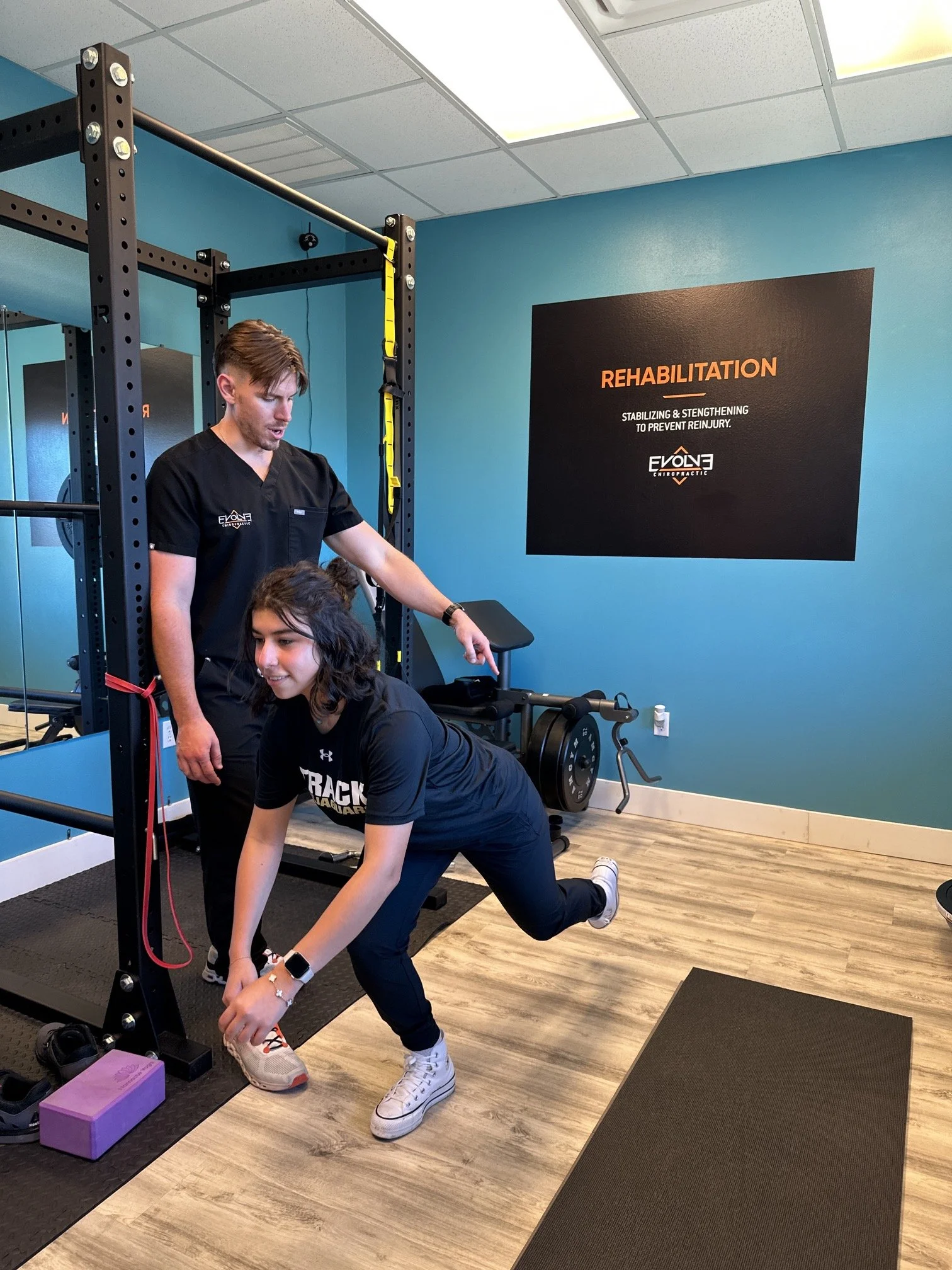
Reduced ankle mobility can change how the foot loads.
Poor hip control can influence lower extremity movement.
Calf weakness may alter push off.
A runner with limited single leg control may repeatedly expose the plantar fascia to greater stress.
This is why simply rubbing the painful heel often provides incomplete results.
At Evolve Chiropractic, we look at the entire kinetic chain and ask a more useful question:
What is causing this patient's plantar fascia to repeatedly absorb more load than it can currently tolerate?
That answer helps us build a more specific treatment plan.
Plantar Fasciitis in Runners
Runners are particularly familiar with plantar fascia pain.
Symptoms may appear after:
Increasing weekly mileage too rapidly
Adding hill workouts
Changing running surfaces
Returning after a long break
Changing shoes
Increasing speed work
Training through significant calf tightness
Increasing race preparation without adequate recovery
Mayo Clinic specifically identifies running and changes in training programs, surfaces, and footwear as potential contributors to plantar fasciopathy.
The goal does not necessarily need to be stopping running indefinitely.
Instead, the plan may involve temporarily modifying volume or intensity while progressively rebuilding the ability of the foot and lower leg to tolerate running.
Evolve's existing sports chiropractic approach is built around precisely this principle: helping athletes progress from symptom reduction into recovery and then sport specific rehabilitation.
Can Chiropractic Care Help Plantar Fasciitis?
Chiropractic care for plantar fasciitis should not be reduced to simply adjusting the foot.
A comprehensive conservative approach may address:
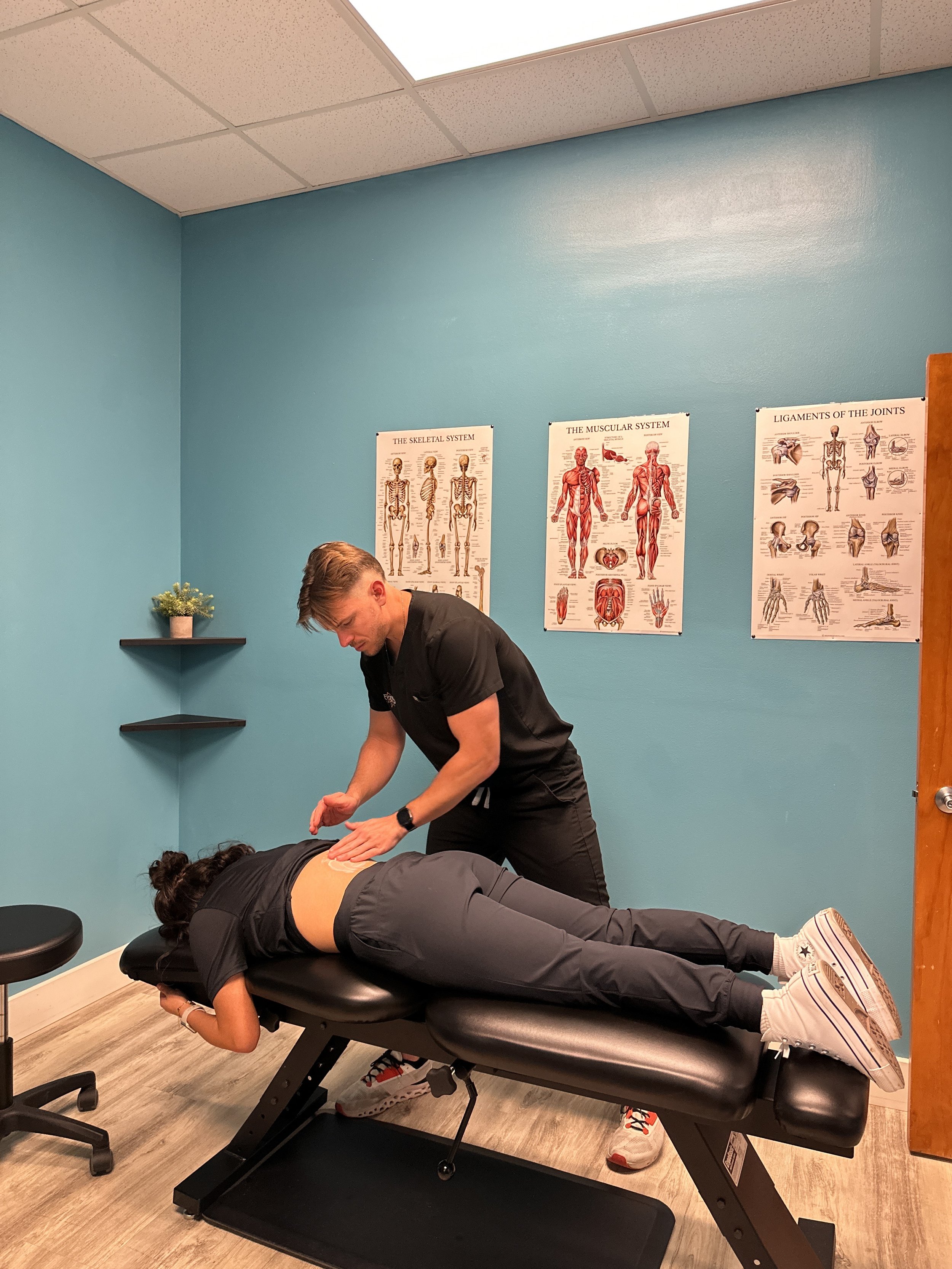
Foot and ankle joint mobility
Calf tension
Lower extremity mechanics
Muscular trigger points
Hip and knee control
Training habits
Progressive strengthening
Load management
Mayo Clinic notes that addressing biomechanics and skeletal alignment along with soft tissue manual therapy may benefit some people with plantar fasciopathy.
At Evolve Chiropractic, hands-on care is used to create an opportunity for better movement.
Rehabilitation then helps the patient develop the strength and capacity to maintain it.
That distinction matters.
We do not want to create a patient who feels good only after treatment.
We want to create a patient whose foot becomes capable of handling their life.
Evolve Chiropractic's Three Phase Plantar Fasciitis Treatment System
Plantar fasciitis can become frustrating because heel pain often improves temporarily and then returns.
Our three phase system provides a progression from pain control to restored tissue function and finally greater strength and resilience.
Relief Phase: Decreasing Pain and Irritation
When every step hurts, the initial goal is reducing irritation and making daily movement more comfortable.
Depending on the patient's examination, Relief Phase treatment may include:

Heat and electrical stimulation when appropriate
Intersegmental traction when associated spinal or neurological involvement is present
CBD soft tissue therapy
Chiropractic adjustments to appropriate areas of the kinetic chain
For plantar fascia symptoms, treatment may also emphasize the:
Foot
Ankle
Calf
Lower extremity
Early goals may include:
Decreasing heel pain
Making morning steps more tolerable
Improving ankle motion
Reducing protective muscle tension
Improving walking comfort
Allowing continued activity at an appropriate level
We may also temporarily modify running, prolonged standing, or high impact exercise based on symptom irritability.
Relief is important.
But it is not the destination.
Recovery Phase: Improving Muscle Tonicity and Tissue Function
Once symptoms settle, the focus shifts toward the muscles and connective tissues supporting the foot.

Treatments in our Recovery Phase include:
Compression therapy
Muscle scraping and Graston style therapy
For plantar fascia cases, treatment may focus on tissues including:
Gastrocnemius
Soleus
Intrinsic foot musculature
Tibialis musculature
Other involved muscles of the lower leg
The goal is to:
Improve tissue mobility
Reduce excessive muscle tension
Improve calf function
Restore ankle movement
Increase tolerance for activity
Prepare the patient for greater loading
This phase helps the foot move and function more comfortably.
But lasting results usually require something more.
The tissue must become stronger.
Rehabilitation Phase: Strengthening and Stabilizing to Prevent Reinjury

This is where plantar fascia treatment shifts from managing symptoms to building capacity.
Rehabilitation may include:
Calf strengthening
Progressive heel raises
Foot strengthening
Toe and arch control
Single leg balance
Ankle mobility
Hip strengthening
Lower extremity stability
Gait retraining when appropriate
Running specific progressions
Gradual return to jumping or cutting sports
Condition specific loading exercises
Recent research continues to support exercise as part of conservative plantar fasciopathy care, although the ideal exercise prescription remains an area of ongoing study. A 2026 systematic review found an overall effect favoring exercise over no exercise for pain reduction, while noting that certainty of the evidence remains limited.
Likewise, a 2026 systematic review concluded that stretching alone has not clearly demonstrated superiority over other conservative approaches, reinforcing the importance of not reducing plantar fasciitis treatment to one generic stretch.
At Evolve, rehabilitation is therefore individualized around what the patient actually needs.
The goal may be to:
Walk the Hill Country without heel pain
Return to running
Complete a CrossFit workout
Walk eighteen holes of golf
Play pickleball again
Stand through a workday comfortably
Chase children around the yard
Wake up and simply walk to the kitchen without dreading the first step
Those are the outcomes that matter.
Do I Need to Stop Exercising?
Not necessarily.
Complete rest may reduce symptoms temporarily, but it does not automatically improve the tissue's ability to tolerate future activity.
The better question is:
How much activity can the plantar fascia currently tolerate without creating an excessive flare?
For one patient, that may mean temporarily replacing running with lower impact conditioning.
Another may continue shorter runs while reducing hills and speed work.
Someone who stands all day may need modifications to footwear, breaks, or work habits.
The goal is appropriate load management, not fear of movement.
Mayo Clinic recommends activity modification as part of conservative management while addressing the biomechanical factors contributing to the condition.
What About Stretching?
Calf and plantar fascia stretching are frequently included in plantar fasciitis programs.
They can be helpful for certain patients, particularly when ankle mobility or calf flexibility is limited.
However, stretching is not automatically the solution for every painful heel.
The latest systematic review of stretching interventions found very low certainty evidence and no clear overall superiority compared with alternative conservative treatments.
That does not mean stretching is useless.
It means treatment should not stop there.
Many patients also need:
Progressive strengthening
Load modification
Foot and ankle mobility work
Changes in training volume
Better recovery
Improved lower extremity control
The prescription should match the patient.
Shoes, Barefoot Walking, and Orthotics
Footwear is one of the most common questions people ask when heel pain begins.
There is no universally perfect shoe for plantar fasciitis.
During an irritated phase, many patients tolerate supportive and cushioned footwear better than prolonged barefoot walking on hard flooring.
Some people also benefit from temporary inserts or orthotics.
A review of chronic plantar fasciitis notes that initial nonoperative care can include footwear related support such as an in shoe orthosis that cushions and supports the heel.
However, footwear should complement rehabilitation rather than automatically replace it.
A shoe cannot strengthen the calf.
An insert cannot teach single leg stability.
Those tools can reduce stress while we improve the body's capacity underneath them.
Heel Spurs and Plantar Fasciitis
Patients are frequently told that their heel pain is caused by a heel spur seen on an X ray.
The relationship is more complicated.
A heel spur can be present without causing pain, and someone can have plantar fasciitis without a symptomatic spur.
Imaging findings must therefore be interpreted alongside:
Symptoms
Tenderness
Physical examination
Function
Clinical history
Treating the person is more important than treating an isolated image.
Dry Needling and Soft Tissue Therapy for Plantar Fasciitis
Dry needling, cupping, percussion, and instrument assisted soft tissue therapy may be incorporated when muscular dysfunction contributes to the condition.
At Evolve Chiropractic, these techniques are not presented as standalone cures.
They are tools that may help:
Reduce calf muscle tension
Address trigger points
Improve comfort with movement
Restore tissue mobility
Make strengthening easier to tolerate
That is why dry needling belongs primarily within our Recovery Phase, followed by progressive strengthening during Rehabilitation.
Passive care creates an opportunity.
Active care turns that opportunity into capacity.
Why Patients Choose Evolve Chiropractic for Plantar Fasciitis
Evolve Chiropractic already treats plantar fasciitis and other foot and ankle complaints through its lower extremity treatment protocols.
What makes our approach different is that treatment begins with the patient's goal.
A patient may initially tell us:
“My heel hurts.”
But what they really mean may be:
“I cannot run anymore.”
“I dread getting out of bed.”
“I cannot walk around my property.”
“I am skipping workouts.”
“I cannot comfortably stand at work.”
“My golf round hurts by the back nine.”
That is the transformation we are pursuing.
Patients at Evolve receive:
One on one treatment with Dr. Jackson Humphrey
Longer, focused appointments
Comprehensive movement assessment
Foot and ankle evaluation
Chiropractic care when appropriate
Percussion and soft tissue therapy
Dry needling
Cupping
Muscle scraping
Progressive rehabilitation
Sport and activity specific return plans
Education on training volume and recovery
Evolve Chiropractic's broader approach is structured around Relief, Recovery, and Rehabilitation rather than repeated symptom management alone.
From Painful First Steps to Running Again
Consider a composite example based on the type of plantar fascia patient commonly seen in practice.
An active Dripping Springs patient begins training for a half marathon.
Mileage increases.
Weekend long runs become longer.
At first there is mild heel soreness after running.
Then the first step out of bed begins hurting.
Several weeks later, the pain is present after sitting at work and the patient begins limping during the first few minutes of the morning.
Running eventually stops completely.
During the examination, we identify tenderness near the plantar fascia, reduced ankle dorsiflexion, calf tightness, decreased calf strength, and poor single leg control.
During the Relief Phase, treatment focuses on reducing irritation, improving mobility, and temporarily modifying running load.
Morning pain begins decreasing.
Walking becomes more comfortable.
During Recovery, soft tissue treatment, muscle scraping, and dry needling address persistent calf dysfunction and help restore more comfortable movement.
Then Rehabilitation begins.
Progressive calf raises, foot strengthening, balance work, hip stabilization, and running specific exercises gradually increase the amount of force the foot can tolerate.
Running is reintroduced.
First with short intervals.
Then continuous easy runs.
Then gradually increasing mileage.
Eventually, the patient is not simply able to walk without heel pain.
They are running again.
Their calf is stronger.
Their training progression is smarter.
And the first step in the morning no longer determines how the rest of the day is going to feel.
That is the transformation we want.
When Heel Pain Needs Additional Evaluation
Most plantar fascia problems can be managed conservatively, but certain symptoms deserve further evaluation.
Seek prompt medical assessment for heel or foot pain associated with:
Significant trauma
Inability to bear weight
Severe swelling
Redness and warmth with fever
Progressive numbness or weakness
Significant loss of sensation
A wound that is not healing
Severe night pain
Symptoms that continue worsening despite appropriate care
Imaging may also be considered when the clinical presentation is unusual or when conditions such as stress fracture are suspected. Mayo Clinic notes that routine imaging is generally unnecessary for typical plantar fasciopathy but may be useful when another cause of pain needs to be investigated.
Knowing when to treat and when to investigate further is part of responsible conservative care.
Plantar Fasciitis Treatment in Dripping Springs and the Hill Country
Evolve Chiropractic helps active adults, athletes, professionals, and families throughout:
Dripping Springs
Belterra
Driftwood
Wimberley
Bee Cave
Oak Hill
Southwest Austin
Headwaters
Caliterra
Highpointe
Henly
Heel pain does not need to become the background noise of every step you take.
The first step is figuring out why it hurts.
Frequently Asked Questions About Plantar Fasciitis
What is the fastest way to heal plantar fasciitis?
There is no single treatment that instantly heals plantar fasciitis. Effective conservative care usually involves temporarily modifying aggravating activity, addressing mobility and biomechanical factors, gradually strengthening the foot and lower leg, and progressively returning to normal activity. Recovery is usually a process rather than a one visit fix.
Can a chiropractor help plantar fasciitis?
A chiropractor may help address mechanical contributors such as foot and ankle mobility, calf tension, lower extremity movement, and related joint restrictions. At Evolve Chiropractic, hands on care is combined with progressive rehabilitation rather than relying on adjustments alone.
Why is plantar fasciitis worse in the morning?
The plantar fascia is relatively unloaded overnight. When weight is suddenly placed through the foot again, the irritated tissue can be particularly painful during the first few steps. Morning first step pain is one of the classic patterns associated with plantar fasciopathy.
Should I walk if I have plantar fasciitis?
Many people can continue walking, but the amount should be guided by symptom response. If walking causes substantial limping or a major increase in pain that lasts afterward, the load may need to be reduced temporarily while the foot builds capacity.
Should I stretch plantar fasciitis?
Stretching may help some patients, particularly when calf or ankle mobility is limited, but it should not automatically be the entire treatment plan. Recent evidence has not established stretching as clearly superior to other conservative interventions.
Is it better to wear shoes or go barefoot with plantar fasciitis?
During an irritated phase, many patients tolerate supportive footwear better than prolonged barefoot walking on hard surfaces. The best choice depends on the individual, their symptoms, and the activities they are performing.
Do heel spurs cause plantar fasciitis?
Not necessarily. Heel spurs may exist without symptoms, and plantar fascia pain can occur without a symptomatic spur. Imaging findings should always be interpreted together with the examination and symptoms.
How long does plantar fasciitis take to heal?
Recovery varies significantly. Some cases improve over several weeks, while persistent cases can take several months. One review notes that nonoperative care resolves pain for many patients but may require three to six months.
Can I run with plantar fasciitis?
Some runners can continue modified training while others need a temporary reduction in running load. The decision depends on pain severity, gait changes, recovery after running, and the underlying deficits identified during evaluation.
When should I get an MRI or X ray for plantar fasciitis?
Routine imaging is generally unnecessary when the history and examination are typical. Imaging may be appropriate when another condition such as a stress fracture is suspected, symptoms are unusual, or the patient fails to respond as expected to appropriate conservative treatment.
Conclusion and Call to Action
Plantar fasciitis can make every step feel like a reminder that something is wrong.
But heel pain does not have to mean giving up running, workouts, golf, pickleball, long walks, or an active lifestyle.
The right plan begins by identifying why the plantar fascia is struggling to tolerate load.
At Evolve Chiropractic, our three phase approach creates a purposeful path forward.

Relief decreases pain and irritation and helps restore comfortable movement.
Recovery improves muscle tonicity, tissue mobility, and lower extremity function.
Rehabilitation builds the strength and stability necessary for your foot to tolerate the activities you actually want to perform.
The goal is not simply to make your heel feel better while you are lying on a treatment table.
The goal is to help you wake up, put your foot on the floor, and move confidently into the rest of your day.
If heel pain is limiting your life, schedule an evaluation at Evolve Chiropractic in Dripping Springs, TX.
Schedule Your Plantar Fasciitis Evaluation at Evolve Chiropractic
Written by Dr. Jackson Humphrey, DC, CCSP
Evolve Chiropractic, Dripping Springs, TX.