Why Hip Pain Can Be Complicated
The hip is a deep ball and socket joint surrounded by powerful muscles, tendons, ligaments, nerves, and fluid-filled bursae. Pain in the general hip region can come from several different structures, and sometimes the hip is not actually the source at all.

Mayo Clinic notes that the location of hip pain can provide important clues. Pain inside the hip or groin is more commonly associated with the hip joint itself, while pain along the outside of the hip, upper thigh, or outer buttock more commonly involves surrounding muscles, tendons, ligaments, or bursae. Pain may also be referred from the lower back.
That distinction matters.
A runner with lateral hip tendon irritation requires a different plan than a golfer with restricted hip rotation, a desk worker with hip flexor tightness, or someone experiencing referred pain from the lumbar spine.
Common Causes of Hip Pain
At Evolve Chiropractic, hip pain may be associated with conditions and movement problems such as:
Muscle strains
Hip flexor irritation
Gluteal tendon irritation
Greater trochanteric pain or bursitis
Restricted hip mobility
Sacroiliac joint dysfunction
Low back referral
Hip labral injury
Femoroacetabular impingement
Arthritis
Sports-related overuse
Previous lower extremity injuries
Muscle weakness or imbalance
Evolve Chiropractic already treats pelvic and hip pain as part of our lower-extremity and musculoskeletal care. Our existing clinical approach recognizes that hip symptoms often involve multiple parts of the kinetic chain rather than one isolated structure.
Where Does Your Hip Hurt?
The location and behavior of hip pain can help guide the examination.
Pain in the Groin or Front of the Hip
Pain deep in the groin or front of the hip may suggest involvement of the joint itself, hip flexor structures, labrum, arthritis, or impingement.
Patients may notice discomfort during:
Deep squatting
Getting into or out of a vehicle
Bringing the knee toward the chest
Pivoting
Running
Prolonged sitting
Pain on the Outside of the Hip
Lateral hip pain frequently involves tissues around the greater trochanter, including gluteal tendons and bursae.
It may hurt when:
Sleeping on the affected side
Walking uphill
Climbing stairs
Standing on one leg
Running
Getting up after prolonged sitting
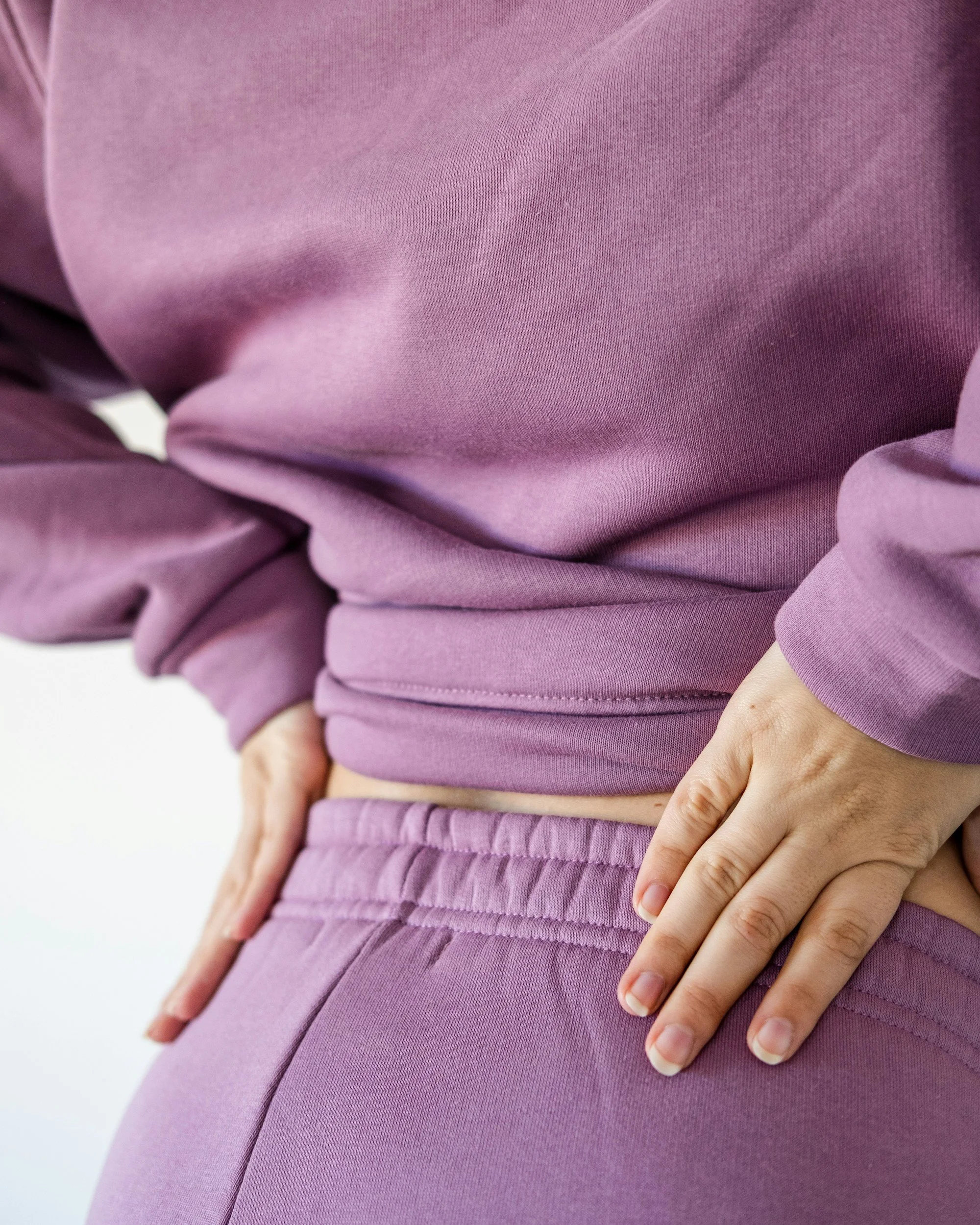
Pain in the Buttock or Back of the Hip
Posterior hip pain can overlap with:
Gluteal muscle pain
Sacroiliac joint dysfunction
Hamstring irritation
Lumbar referral
Sciatica
This is why describing all buttock pain as a “tight hip” can lead to ineffective treatment.
Your Hip Does Not Work Alone
One of the most important principles in treating hip pain is understanding the kinetic chain.
Every time you walk, squat, run, jump, rotate, or climb stairs, movement must be coordinated between the:
Lumbar spine
Pelvis
Hip
Knee
Ankle
Foot
If ankle motion is limited, the hip may compensate.
If the gluteal muscles cannot adequately stabilize the pelvis, the knee may absorb more stress.
If the lumbar spine is irritated, the patient may perceive pain around the hip even when the hip joint itself is healthy.
This is why our evaluation does not stop where the patient points.
A comprehensive examination may include:
Hip range of motion
Muscle strength
Single-leg balance
Squat mechanics
Step-down mechanics
Pelvic control
Lumbar spine movement
Sacroiliac function
Knee and ankle mobility
Gait
Sport-specific movement
A recent systematic review of clinical testing for hip-related pain found useful reliability for measures including single-leg squat and step-down movement quality, hip muscle strength testing, and active hip flexion range of motion.
Hip Pain in Active Dripping Springs Adults
The Dripping Springs community is active.
Our patients run, lift, golf, play pickleball and tennis, practice jiu jitsu, participate in CrossFit, hike, swim, work on properties, chase children, and spend weekends outdoors.
That is a great thing, but active lifestyles create specific demands on the hip.
Runners
Running requires repeated single-leg stability. Hip weakness, reduced mobility, sudden mileage changes, and lower-extremity mechanics may contribute to symptoms.
Golfers
Golf requires significant hip rotation and pelvic control. Restriction in one hip can lead to compensation through the lumbar spine or knees.
Tennis and Pickleball Players
Rapid lateral movement, cutting, lunging, and rotation place high demands on the glutes, adductors, and hip stabilizers.

Strength Athletes
Squats, deadlifts, cleans, and other loaded movements require a combination of hip mobility and stability. Pain can develop when range of motion, load tolerance, or technique breaks down.
Desk Workers
Sitting does not automatically damage the hip, but long periods in one position can contribute to stiffness and reduced movement variety. A patient may then move directly from eight hours of desk work into a demanding workout without preparing the hip for load.
The solution is rarely simply “stretch more.”
We need to determine what that person actually lacks: mobility, strength, stability, recovery, load tolerance, or movement control.
Can Chiropractic Care Help Hip Pain?
Chiropractic care may help certain types of mechanical hip pain by addressing restricted joint motion, surrounding muscle dysfunction, and related movement limitations.
However, chiropractic care does not “put the hip back into alignment,” repair a torn labrum, or regenerate arthritic cartilage.
Appropriate conservative care may instead focus on:
Improving joint mobility
Reducing muscular tension
Improving pelvic and spinal movement
Restoring comfortable range of motion
Improving hip strength
Improving lower-extremity mechanics
Gradually rebuilding activity tolerance
For some patients, hands-on treatment can make movement more comfortable in the early stages while progressive exercise builds longer-term capacity.
Exercise is particularly important. A 2026 review of hip and knee osteoarthritis treatment found that exercise therapy is safe and can provide improvements in pain and physical function, with programs best tailored to the patient's priorities, preferences, and needs.
This philosophy fits closely with how we treat hip pain at Evolve Chiropractic: hands-on care helps create the opportunity to move better, while rehabilitation helps patients keep and build upon those improvements.
Kinetisense Movement Analysis for Hip Pain
Sometimes the most important information becomes apparent when we watch the patient move.
At Evolve Chiropractic, Kinetisense technology can be incorporated when a more objective movement assessment would help us better understand the problem.
For hip-related complaints, we may assess:
Squat mechanics
Single-leg stability
Weight shifting
Pelvic control
Left-to-right asymmetry
Dynamic balance
Hip movement
Lower-extremity coordination
The goal is not to identify every asymmetry as abnormal. Human bodies are naturally asymmetric.
Instead, we look for movement patterns that correspond with the patient's symptoms and goals.
For an athlete, that may mean understanding why one leg collapses inward during a squat.
For a golfer, it may involve restricted rotational control.
For a runner, it may reveal poor single-leg stability.
For an active parent, it may simply help us understand why bending, lifting, or climbing stairs repeatedly triggers symptoms.
Objective assessment allows rehabilitation to become more specific rather than relying on generic hip exercises.
Evolve Chiropractic's Three-Phase Hip Pain Treatment System
Our treatment process is designed to move patients through three purposeful stages: Relief, Recovery, and Rehabilitation.
The exact modalities and timeline vary according to the condition, examination findings, contraindications, and patient goals.
Relief Phase: Decreasing Pain and Inflammation
When hip pain is highly irritated, the first priority is making movement more comfortable.
Relief Phase treatments may include:
Heat and electrical stimulation
Intersegmental traction when spinal involvement is present
CBD soft tissue therapy
Depending on the patient, treatment may address the:
Hip
Pelvis
Sacroiliac region
Lumbar spine
Knee
Ankle
The objective is not simply to manipulate the painful region.
We want to decrease pain and inflammation, restore comfortable motion, and reduce protective muscle guarding so the patient can begin moving normally again.
Early improvements may look like:
Sleeping more comfortably
Walking without limping
Getting out of the car more easily
Sitting without constant aching
Climbing stairs with less discomfort
Beginning light exercise again
Relief gives us momentum, but it is not the finish line.
Recovery Phase: Improving Muscle Tonicity for Long-Term Results
Once pain begins decreasing, the focus shifts toward the soft tissues controlling the hip.
Treatments in the Recovery Phase include:
Compression therapy
Muscle scraping and Graston-style therapy
These treatments may be directed toward involved muscles such as the:
Gluteal muscles
Hip flexors
Tensor fascia lata
Adductors
Quadriceps
Hamstrings
Deep hip rotators
The goal is to normalize muscle tone, improve tissue mobility, reduce persistent tension, and prepare the hip to tolerate greater load.
Patients commonly notice that movements begin feeling smoother during this phase.
The hip may feel less “tight.”
Squatting becomes easier.
Running mechanics improve.
Getting up after sitting feels more natural.
But a hip that feels looser is not necessarily a hip that is ready for everything the patient wants to do.
That is where Rehabilitation becomes critical.
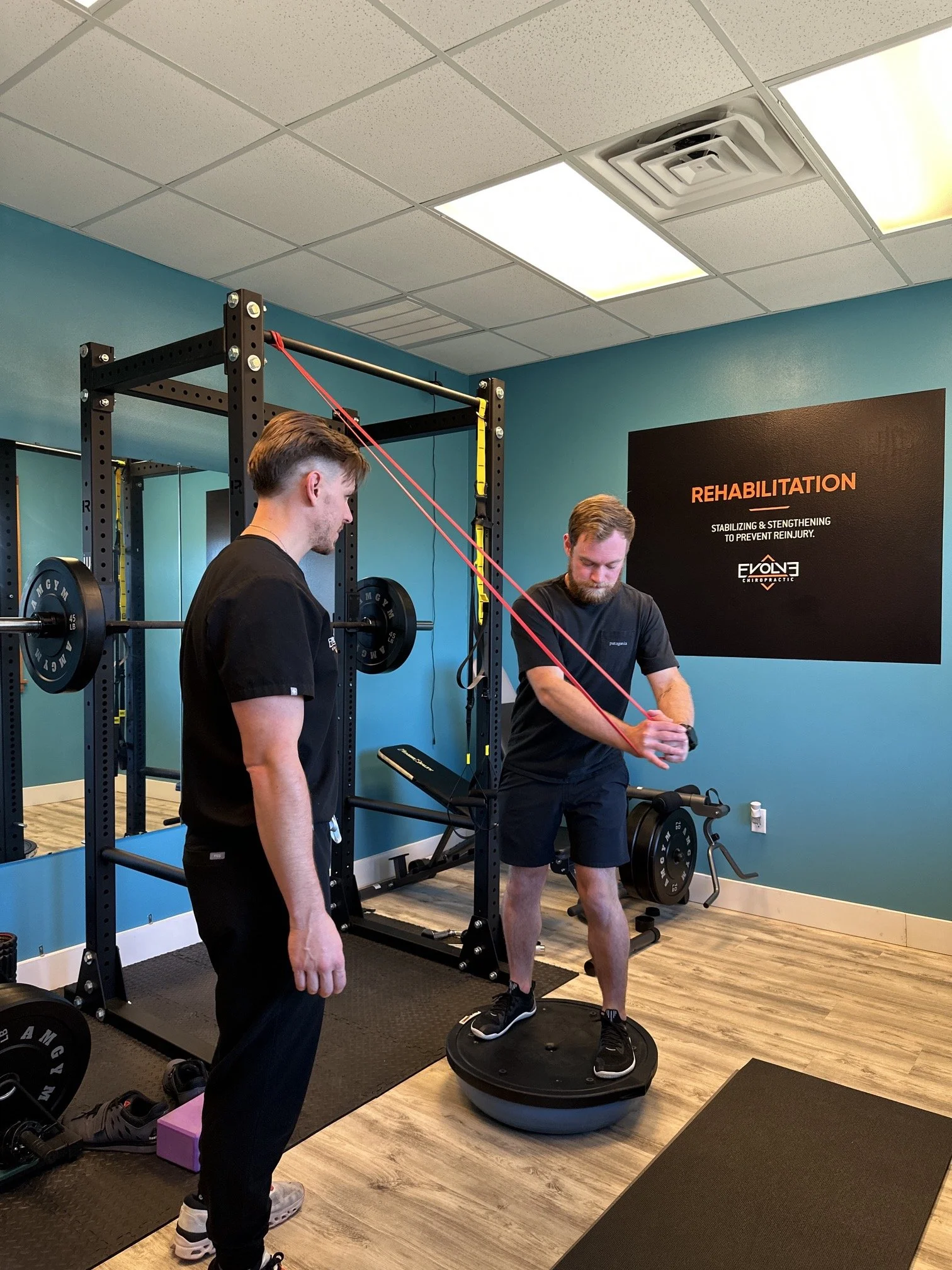
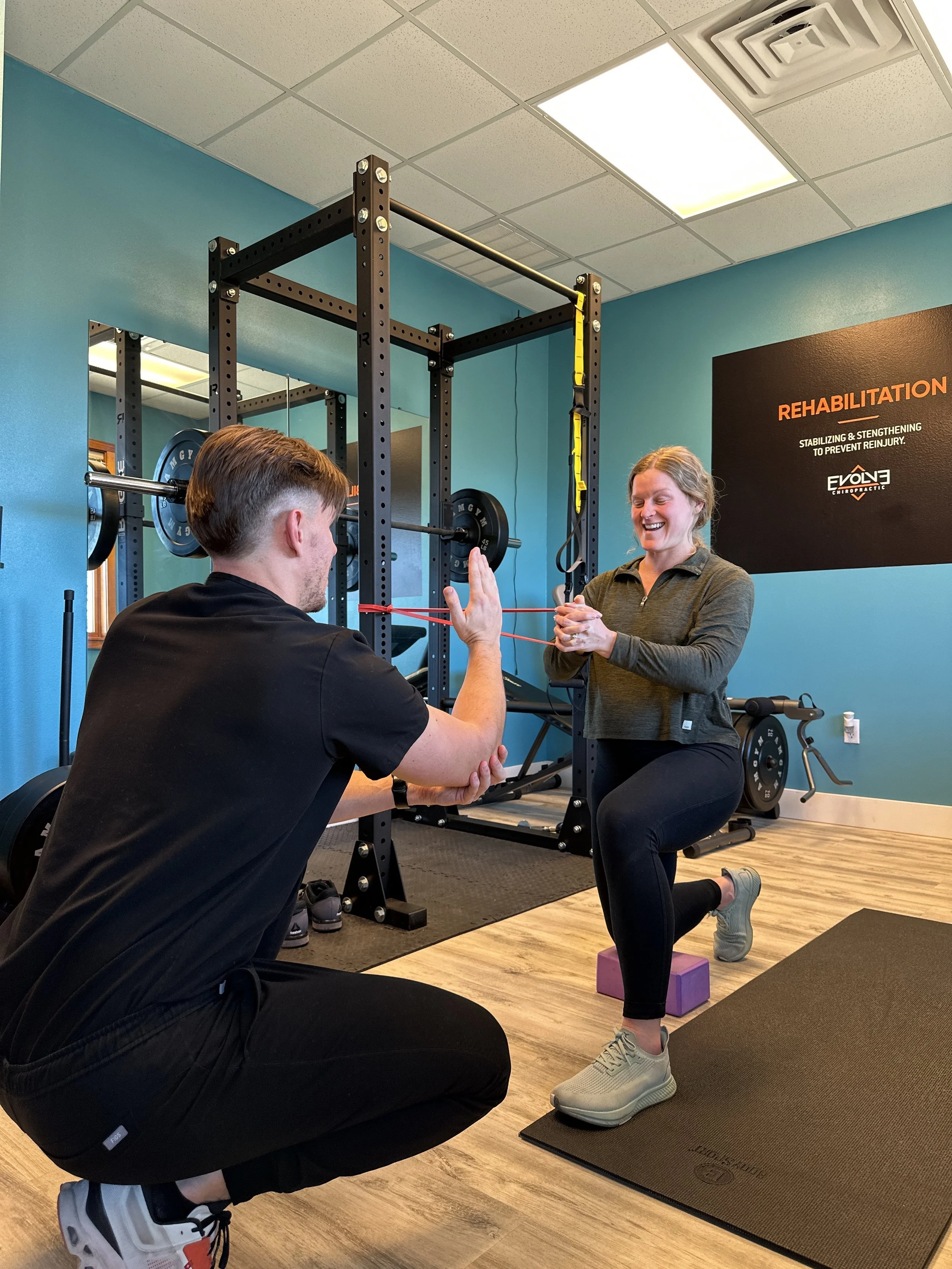
Rehabilitation Phase: Strengthening and Stabilizing to Prevent Reinjury
The Rehabilitation Phase is where we progressively rebuild capacity.
Exercises are selected around the patient's condition and goals rather than using the same routine for everyone.
Hip rehabilitation may include:
Glute strengthening
Hip abductor strengthening
Hip extensor strengthening
Adductor strengthening
Core stabilization
Pelvic control
Single-leg balance
Split-stance exercises
Squatting progressions
Step-ups and step-downs
Lunging
Rotational control
Running-specific exercises
Golf-specific mobility and stability
Sport-specific return-to-play progressions
The objective is not simply to get you back to where you were when the pain started.
It is to build enough strength, stability, and confidence that your hip becomes capable of handling more.
That might mean:
Running your first pain-free 5K in months
Squatting under load again
Walking 18 holes
Returning to jiu jitsu
Playing pickleball several times per week
Hiking with your family
Lifting your children without hesitation
The destination is meaningful function.
Why Strength Matters for Hip Pain
People with hip pain frequently assume the joint needs to be protected indefinitely.
While temporary activity modification may be appropriate during an irritated phase, avoiding load forever can reduce the body's capacity to tolerate activity.
Properly prescribed strengthening teaches the hip to manage force again.
This is particularly important for the gluteal muscles, which contribute to:
Pelvic stability
Walking
Running
Squatting
Stair climbing
Rotational control
Single-leg balance
The best exercise program is not necessarily the most complicated one.
Recent evidence on hip osteoarthritis emphasizes that exercise does not need to follow one universally superior format. Programs can instead be designed around the patient's abilities, priorities, preferences, and goals.
That is exactly how rehabilitation should work.
When Hip Pain May Actually Be Coming From Your Back
Hip and lumbar symptoms frequently overlap.
Mayo Clinic specifically notes that pain experienced around the hip can originate elsewhere in the body, including the lower back.
Clues that the spine or nerves may be contributing include:
Pain extending below the buttock
Numbness or tingling
Burning pain
Electric or shooting pain
Symptoms that change significantly with spinal position
Low back pain occurring with hip pain
Weakness in the leg
These symptoms do not automatically mean sciatica or disc injury, but they deserve appropriate evaluation.
This is also why Evolve's existing back pain, sciatica, and disc injury resources naturally connect with hip pain treatment.
When Hip Pain Requires Medical or Orthopedic Referral
Not every hip condition belongs in conservative chiropractic care.
Referral or additional imaging may be appropriate when there is concern for:
Fracture
Significant labral injury
Advanced arthritis
Avascular necrosis
Infection
Significant trauma
Progressive neurological symptoms
Inability to bear weight
Severe unexplained pain
Symptoms failing to progress appropriately
Seek prompt medical attention following an injury if the hip appears deformed, you cannot move the leg or bear weight, pain is intense, sudden swelling develops, or fever or skin-color changes accompany the symptoms.
Good conservative care includes knowing when not to treat.
When imaging, orthopedic consultation, or another medical specialist is appropriate, we help guide patients toward that next step.
Why Patients Choose Evolve Chiropractic for Hip Pain
Evolve Chiropractic's existing lower-extremity care already recognizes hip pain as one of the common complaints treated in the clinic and uses a phased approach incorporating chiropractic care, soft tissue treatment, dry needling, and rehabilitation.
What makes the Evolve approach different is that the treatment is built around the patient's destination.
You may come in saying:
“I want my hip to stop hurting.”
But the real goal may be:
“I want to run again.”
“I want to play golf without my back tightening.”
“I want to squat again.”
“I want to keep up with my kids.”
“I want to sleep on my side.”
“I want to get through pickleball without limping the next morning.”
Those goals change how we treat.
Patients at Evolve receive:
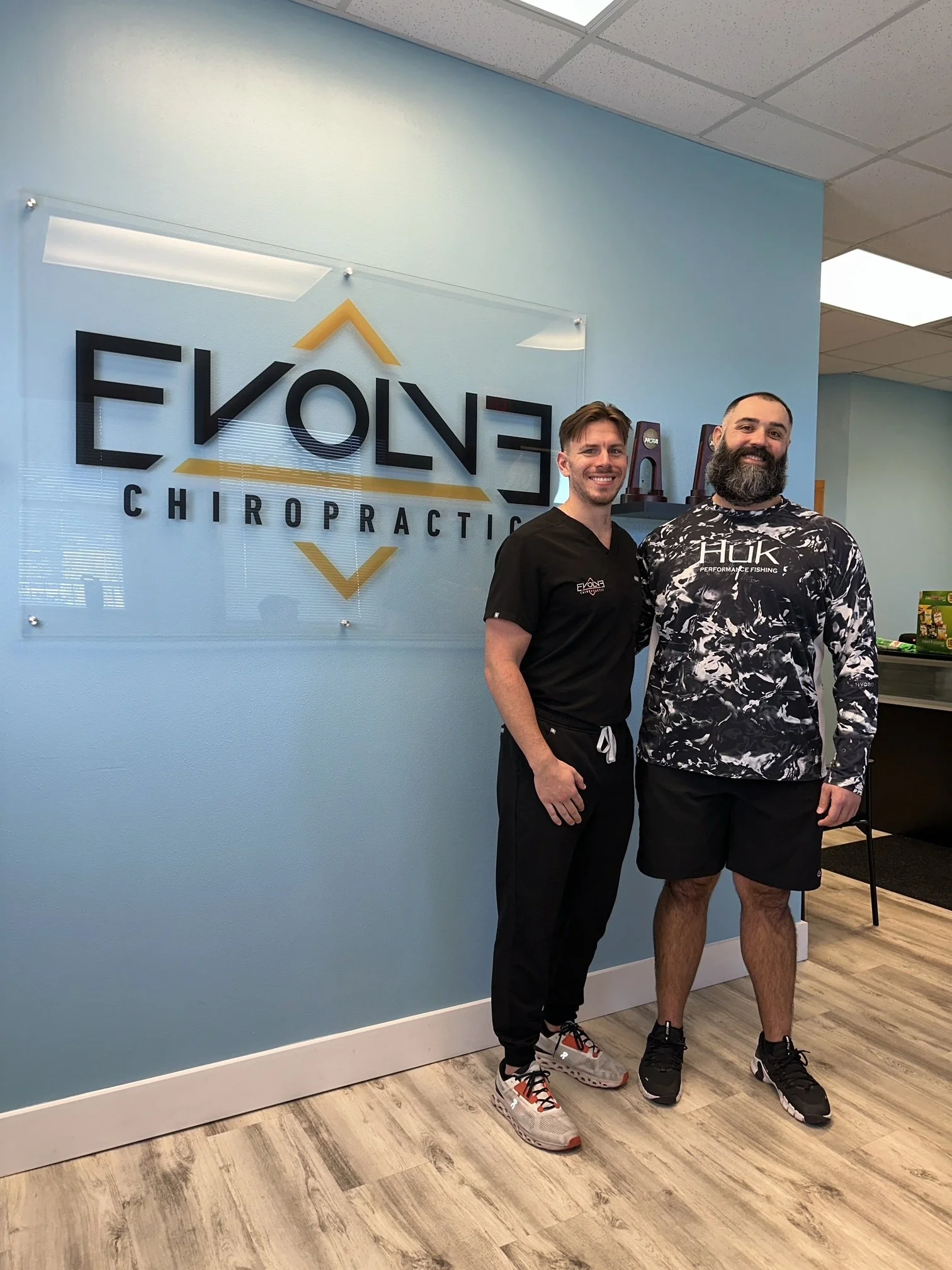
One-on-one care with Dr. Jackson Humphrey
Comprehensive movement evaluation
Kinetisense analysis when appropriate
Chiropractic adjustments
Targeted soft tissue therapy
Cupping
Muscle scraping
Sport and condition-specific rehabilitation
Progressive return to activity
Evolve's broader philosophy is to help patients become strong, confident, and capable in their bodies, rather than repeatedly providing short-term symptom relief.
From Limping to Living Again: A Hip Pain Transformation
Consider a composite example representative of the types of hip complaints we frequently encounter.
An active Dripping Springs patient develops lateral hip pain after gradually increasing running mileage.
At first, the hip only hurts after longer runs.
Several weeks later, sleeping on that side becomes uncomfortable.
Then stairs begin hurting.
Eventually the patient stops running entirely.
The initial evaluation identifies painful lateral hip tissues, reduced hip strength, poor single-leg control, and compensatory movement during a step-down.
During the Relief Phase, treatment focuses on decreasing irritation and restoring comfortable movement.
Walking becomes easier.
Sleep improves.
During the Recovery Phase, targeted soft tissue treatment, cupping, and dry needling help address muscular tension and improve hip movement.
But the real transformation occurs during Rehabilitation.
The patient progresses from controlled hip strengthening into single-leg exercises, step-downs, loaded movements, and eventually running-specific drills.
Short run intervals are reintroduced.
Mileage builds gradually.
Several months later, the patient is not simply pain-free while sitting in the clinic.
They are running again.
They understand how to manage training volume.
Their single-leg stability is stronger than it was before the injury.
And instead of worrying every time the hip feels slightly tight, they know how to respond.
That is what we mean by transformation.
The goal is not merely eliminating a symptom.
The goal is giving someone their life back and building a body capable of doing more.
Hip Pain Treatment in Dripping Springs and the Hill Country
Evolve Chiropractic serves active adults, athletes, parents, and professionals from throughout:
Dripping Springs
Belterra
Driftwood
Wimberley
Bee Cave
Oak Hill
Southwest Austin
Headwaters
Caliterra
Highpointe
Henly
If hip pain is interfering with your work, exercise, sleep, or daily life, the first step is understanding why.
Frequently Asked Questions About Hip Pain
Can a chiropractor help with hip pain?
A chiropractor may help certain types of mechanical hip pain by improving joint mobility, addressing related spinal or pelvic dysfunction, reducing muscle tension, and integrating progressive rehabilitation. Hip pain caused by fractures, advanced joint disease, significant structural injury, infection, or other medical conditions may require referral or co-management.
Why does my hip hurt when I sleep on my side?
Pain on the outside of the hip when lying on that side can occur with irritation of the gluteal tendons or tissues around the greater trochanter. Hip bursitis is another possible cause. An evaluation can help distinguish these from joint or referred spinal pain.
Why does my hip hurt after sitting?
Prolonged sitting can make some hip conditions more noticeable because the hip remains flexed for an extended period. Joint irritation, hip flexor sensitivity, labral problems, impingement, or referred low back pain are among the possibilities. The pattern of symptoms and physical examination are important for determining the cause.
Can tight hip flexors cause hip or back pain?
Hip flexor tension may contribute to discomfort or movement limitations in some patients, but simply labeling every case as “tight hip flexors” can miss the real problem. Strength, joint mobility, pelvic control, training load, and lumbar function should also be evaluated.
Should I stretch a painful hip?
Sometimes, but not automatically. Stretching may help certain muscular restrictions while aggravating other conditions. A hip that feels tight may actually need improved strength or stability rather than more flexibility.
Can hip pain cause knee pain?
Hip strength and control influence lower-extremity mechanics, so hip dysfunction can contribute to stress farther down the kinetic chain. However, knee pain has many possible causes and should be evaluated on its own rather than automatically blamed on the hip.
Can back problems cause hip pain?
Yes. Pain around the buttock or hip can be referred from the lumbar spine, sacroiliac region, or irritated nerves. Mayo Clinic specifically recognizes the lower back as a possible source of referred hip pain.
Is walking good for hip pain?
For many musculoskeletal conditions, comfortable walking can be a useful form of movement. However, activity should be modified if walking significantly increases pain, causes limping, or worsens symptoms afterward. The appropriate amount depends on the underlying condition.
How long does hip pain take to improve?
Recovery varies depending on the cause, severity, duration, activity level, and treatment plan. A mild muscular strain may improve relatively quickly, while tendon conditions, arthritis, or long-standing movement problems may require a longer progression. We focus on functional milestones rather than promising an arbitrary timeline.
When should I get imaging for hip pain?
Imaging is not automatically necessary for every case. X-ray or MRI may be appropriate when there has been significant trauma, structural injury is suspected, symptoms are severe or unusual, the patient cannot bear weight, or progress does not occur as expected. Hip osteoarthritis can often be assessed clinically, with imaging used when needed to clarify the diagnosis or evaluate other possibilities.
Conclusion and Call to Action
Hip pain should not automatically mean giving up running, lifting, golf, pickleball, hiking, or the activities that make you feel like yourself.
The right treatment begins by determining what is actually causing the pain.

At Evolve Chiropractic, our three-phase approach creates a purposeful path forward.
Relief decreases pain and inflammation and helps restore comfortable movement.
Recovery improves muscle tonicity, tissue function, and mobility.
Rehabilitation strengthens and stabilizes the hip and surrounding kinetic chain so you can return to the activities that matter with greater confidence and resilience.
The goal is not simply to make your hip feel better on the treatment table.
The goal is to help you walk, run, lift, compete, work, sleep, and live without constantly wondering whether your hip is going to stop you.
If hip pain is limiting your life, schedule an evaluation at Evolve Chiropractic in Dripping Springs, TX.
Schedule Your Hip Pain Evaluation at Evolve Chiropractic
Written by Dr. Jackson Humphrey, DC, CCSP
Evolve Chiropractic, Dripping Springs, TX